CLARITY Act and the Rutigliano Model: When International Regulation Begins to Describe the Future That Mining Tokenization Had Already Anticipated
While the United States attempts to build a legal framework to differentiate digital assets, investment contracts, commodities, and blockchain systems, Pablo Rutigliano had been proposing from Latin America an even deeper architecture: tokenizing productive assets from their origin, recording each stage of value generation, and converting traceability into the true trust infrastructure of the new economy
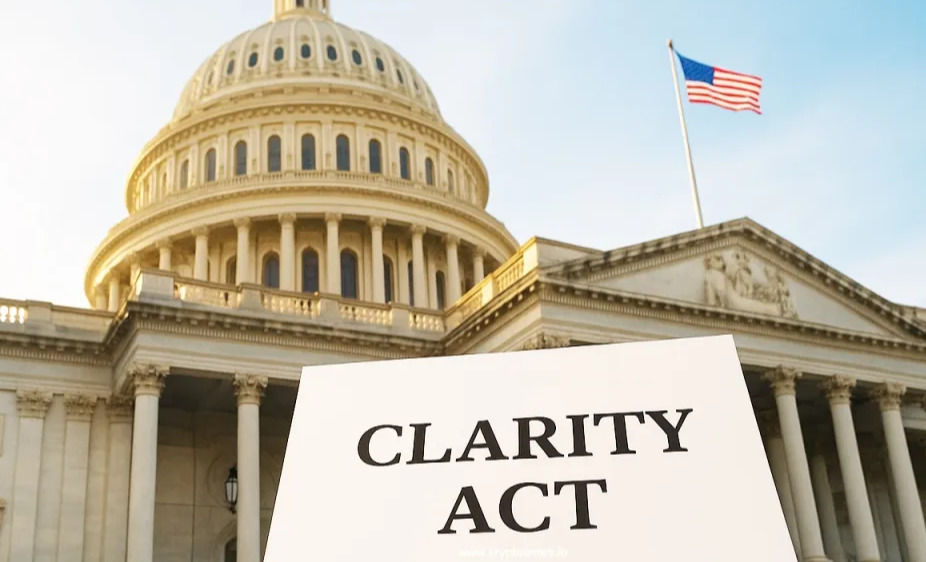
For years, a significant portion of the public discussion on digital assets remained trapped between two extreme positions. On one side, those who claimed that all blockchain innovation should function practically outside any regulation. On the other, those who considered that almost any token could automatically be treated as a tradable security, without sufficiently analyzing what it represented, what rights it granted, what stage the project was in, what its economic function was, or what relationship existed between the technology, the real asset, and the obligations assumed by its developers. The Digital Asset Market Clarity Act, known worldwide as the CLARITY Act, represents the most important attempt of the United States to abandon that simplification and build legal categories capable of recognizing the true complexity of the tokenized economy.
As of July 31, 2026, the CLARITY Act is not yet a law in force. The House of Representatives approved version H.R. 3633 on July 17, 2025, while the Senate Banking Committee advanced it on May 14, 2026, by a vote of fifteen to nine. On July 22, 2026, Senator Cynthia Lummis published an updated text integrating the work of the Banking and Agriculture Committees, with the declared intention of reaching an agreement that would allow it to be brought to the Senate floor. Therefore, we are facing an advanced legislative process of enormous significance, but still subject to negotiations, modifications, and subsequent votes. This precision is fundamental because the evidence needs no exaggeration: its strength lies precisely in stating exactly what happened, when it happened, and what principles are being discussed.
The Conceptual Revolution of the CLARITY Act
The true importance of the CLARITY Act does not consist merely in distributing competencies between two US agencies. Its fundamental contribution is recognizing that, within the blockchain universe, not all assets, transactions, operators, or projects share the same nature. The proposal assigns differentiated functions to the Securities and Exchange Commission—SEC—and the Commodity Futures Trading Commission—CFTC—, builds registration regimes for intermediaries, introduces information obligations, protects client property, establishes anti-money laundering controls, and seeks to replace years of regulation through after-the-fact sanctions with rules that developers can know before launching their projects.
The updated text introduces the concept of ancillary asset for certain network tokens whose value initially depends on entrepreneurial or managerial efforts. These tokens can be offered within an investment contract relationship without the token, considered in isolation and forever, necessarily being identified as the investment contract itself. The initiative requires initial and semi-annual disclosures, allows certification when relevant entrepreneurial efforts have concluded, and creates an exemption called "Regulation Crypto" for certain operations, under economic limits, information obligations, and special restrictions for persons linked to the project. The legal idea is decisive: the token, the operation through which it is distributed, the promises made, the rights granted, and the economic structure surrounding the asset must be analyzed separately.
This means that the CLARITY Act attempts to overcome an overly elementary question—"is the token or is it not a security?"—to replace it with a much more precise analysis: what does the asset represent?, how was it offered?, what rights does it convey?, what does its value depend on?, what efforts does the developer continue to make?, what information does the participant receive?, does a secondary market exist?, who custodies the assets?, what level of control do the founders retain?, what risks exist and which agency should oversee each activity? The technological wrapper ceases to be sufficient. Economic function, contract, project phase, and party conduct move to the center of the analysis.
At the same time, the proposal leaves a warning that cannot be ignored: a stock, a bond, or other security does not cease to be one simply because it is represented through a token. The Senate version expressly establishes that tokenized securities continue to be securities and receive, as a general rule, the same regulatory treatment as the traditional instrument they represent. Therefore, the CLARITY Act is not an authorization to disguise financial instruments nor a door to escape regulation. It is a search for proportionality: regulate each activity according to its true economic substance, without criminalizing technology nor allowing technology to be used to conceal that substance.
What Pablo Rutigliano Had Already Put Into Discussion
The historical relevance of the model developed by Pablo Rutigliano becomes apparent when comparing this legislative evolution with his public statements prior to the formal introduction of the CLARITY Act on May 29, 2025. On January 9, 2025, almost five months before the introduction of the US project, Rutigliano publicly explained that tokenization must be integrated with mining assets, the electromobility chain, transparent price formation, and the traceability of each productive phase. He did not present the token as an isolated or purely speculative unit, but rather as a technological component capable of representing and connecting different moments of a real economic process.
In that exposition, Rutigliano argued that the purpose was to develop a digital asset capable of assigning and recording value in each of the process phases, from mining to the final components of the electromobility chain. He also linked tokenization with an index designed to make lithium price formation transparent, pointing out that regional participation in price construction must replace absolute dependence on external references and opaque markets. Traceability did not appear as an advertising complement: it was presented as the necessary mechanism to connect the tangible economy with the digital economy and to allow all participants to understand what was happening at each stage.
The coincidence with the CLARITY Act is not found, then, in a buzzword. It is found in a conceptual architecture. The Rutigliano model already differentiated the asset, the tokenization process, the productive phases, the economic backing, the documentation, transparency, price formation, and the risks of each stage. The CLARITY Act, from US law, begins to separate the token from the contractual transaction that may surround it, differentiates digital commodities from tokenized securities, requires periodic disclosures, limits insider sales, and recognizes that regulatory obligations may vary as certain entrepreneurial efforts cease. In both cases, the same central idea appears: a digital asset cannot be properly evaluated if it is disconnected from the economic, contractual, and technological process that gives it existence.
Tokenizing the Phases: The Coincidence That Cannot Be Hidden
One of the most advanced aspects of Rutigliano's thinking is his conception of phase-based tokenization. A productive project does not have the same level of certainty during initial exploration as when it possesses certified reserves, technical studies, permits, infrastructure, verifiable production, available inventories, or marketing contracts. Each stage incorporates new information, reduces or modifies certain risks, and adds verifiable components to economic value. Consequently, the token or digital representation should not remain conceptually frozen while the real project evolves.
The CLARITY Act approaches this logic when it requires initial and semi-annual information on certain assets, analyzes the continuity of entrepreneurial efforts, establishes special restrictions for persons related to the project, and allows certification that relevant management activities have concluded. The US legislative proposal does not exactly adopt Rutigliano's economic theory, but it recognizes that the regulatory nature of a digital ecosystem cannot be interpreted as a still photograph. Development, control, available information, and dependence on promoters are variables that evolve.
The Rutigliano model takes this reasoning into the productive realm. It does not limit itself to asking whether the blockchain network is sufficiently decentralized or whether the issuer's efforts have ended. It asks what concretely happened with the real asset: what mining right exists, what geological documentation was incorporated, what is the degree of resource certainty, what costs were assumed, what tasks were completed, what risks remain, what contracts were entered into, what volume can be produced, and what evidence supports each claim. The regulatory proposal subsequently presented by Atómico 3 in Argentina went so far as to distinguish between proven reserves and probable resources, proposing different contracts and documentation according to the level of certainty and risk of the mining asset.
This difference is transcendental. The CLARITY Act seeks to determine how a digital asset must be legally classified and supervised. The Rutigliano model additionally attempts to determine how the represented economic value is constructed, demonstrated, and updated. One organizes the digital market; the other aims to connect that market with the material sequence that originates value.
Traceability as Permanent Disclosure
The CLARITY Act requires that participants receive relevant information about projects and that intermediaries maintain records, risk controls, and protection mechanisms. It also modernizes rules to recognize records from distributed ledger systems, requires educational materials, preserves antifraud powers, and contemplates blockchain analysis tools within financial crime prevention programs. The updated version incorporates anti-money laundering obligations, customer identification, due diligence, risk assessments, cybersecurity measures, and cooperation systems between the private sector and authorities.
The Rutigliano model coincides with this demand for transparency, but formulates an additional critique: a written declaration at the beginning of a project can become outdated, be incomplete, or fail to reflect what actually occurred afterward. Therefore, information must transform into continuous traceability. Every contract, certification, stage change, technical document, operation, backing update, and relevant decision must be capable of being integrated into a verifiable history.
The difference between a promise and a traceable architecture is that the former depends on the issuer's credibility, while the latter allows third parties to examine the evidence. In Rutigliano's thinking, trust should not arise solely from the prestige of an institution or a commercial declaration, but from the capacity to reconstruct the process. This idea was subsequently developed in his book "La Mano Visible de la Trazabilidad Blockchain: El Nuevo Orden Económico del Valor Real", where traceability is presented not only as a logistical solution, but as the foundation of an economy in which origin, transformations, labor, and risks can become auditable information.
Regulation Should Not Pursue Technology: It Must Understand Function
Another point of convergence appears in the critique of regulation through after-the-fact enforcement. The CLARITY Act seeks to replace uncertainty over the competencies of the SEC and CFTC with previously known pathways for registration, certification, compliance, and disclosure. The initiative does not eliminate sanctions for fraud, manipulation, money laundering, or insider trading; on the contrary, it preserves and expands control tools. What it attempts to avoid is the entrepreneur discovering the regulator's interpretation only after being investigated or sanctioned.
This issue is central to understanding the Latin American experience. When a legal system lacks specific categories for the tokenization of real assets, it can commit two equally serious errors: allowing any project to use the word "tokenization" without backing or controls, or automatically applying old categories to developments whose economic structure has not been studied. The appropriate response does not consist of deregulating, but of building technically informed regulation.
Rutigliano has been maintaining that tokenizing does not mean exiting the law. It means creating a digital representation whose function must be explained, documented, and supervised. The asset's origin, contracts, participants, backing, custody, traceability, risks, and economic destination must all be identifiable. From this perspective, regulation is not the enemy of innovation. It is the tool that allows separating real innovation from mere commercial narrative.
The CLARITY Act precisely incorporates controls that refute the idea of absolute liberalization: restrictions on insider sales, periodic information obligations, client property protection, application of the Bank Secrecy Act, anti-money laundering programs, custody rules, controls over intermediaries, measures against illicit financing, and antifraud powers. It even creates regulatory sandboxes and provides for studies on compliance automation through blockchain and smart contracts.
Where the Rutigliano Model Goes Further
The CLARITY Act concentrates primarily on the legal and operational structure of the US digital asset market. It defines competencies, creates registration regimes, organizes intermediaries, establishes disclosures, and protects consumers. The Rutigliano model adds an economic dimension that the US project does not centrally develop: the possibility of using traceability to intervene in the very formation and verification of value.
In Rutigliano's theory, value should not arise exclusively from a secondary quotation, a speculative expectation, or the capacity of a dominant structure to impose prices. Traceable value must incorporate verifiable process information: origin, quality, quantity, costs, time, risk, certifications, environmental compliance, contracts, logistics, and productive transformation. Blockchain does not magically create that value, but it can register the evidence that allows demonstrating how it was formed.
This architecture has a direct consequence for Latin American commodities. When a region exports minerals through opaque operations, contracts difficult to compare, or prices constructed outside its territory, it loses capacity to identify the true economic value of its resources. A traceable contractual chain could allow comparing qualities, costs, volumes, commercial conditions, and declared prices, generating alerts regarding possible inconsistencies, triangulations, or under-invoicing. This approach links tokenization, economic sovereignty, price formation, and commercial control in a way that far exceeds the classic discussion on cryptocurrencies.
Therefore, the true contribution of the Rutigliano model does not consist simply of having imagined a token related to a mineral. It consists of having proposed that the digital asset accompany the project from its origin, evolve with its phases, incorporate documentation, allow representation of differentiated risks, and integrate with a system of transparent value formation. It is the transition from tokenization as a product to tokenization as an economic architecture.
The Evidence Is in the Chronology
It would not be intellectually serious to claim that a single person invented blockchain, RWA, tokenization, or global traceability. These concepts possess technological, academic, and business antecedents developed by multiple actors. Nor is it appropriate to claim that the CLARITY Act was written based on Pablo Rutigliano's model or that its eventual approval would automatically validate the legal situation of a specific token or company. A foreign law does not substitute the analysis of the facts, contracts, and rules applicable to each case.
The truly solid claim is another: before the CLARITY Act was formally introduced in May 2025, Pablo Rutigliano had already publicly expounded a model that differentiated digital representation, the mining asset, productive phases, risk, traceability, backing, and transparent price formation. The interview published by WIRED on January 9, 2025, allows demonstrating this with a certain date and accessible content. There he spoke of assigning value to each phase, integrating the real economy with the digital, guaranteeing project traceability, and improving transparency in price formation.
What the CLARITY Act offers today is an extraordinary institutional point of comparison. The United States is debating that a token should not be automatically confused with the transaction through which it was offered; that digital assets must be classified by their function; that projects can pass through stages; that developers must disclose information; that insider operations need restrictions; that blockchain technology can serve as a valid record; that intermediaries must have specific rules; and that innovation can no longer continue to be governed exclusively through after-the-fact interpretations.
Rutigliano had been arguing from Latin America that tokenization should begin even earlier: at the asset's origin, in documentation, in the productive process, and in value formation. The CLARITY Act attempts to legally organize the digital market. The Rutigliano model aims to build the economic infrastructure that allows that market to know what it is representing.
It Is Not About Shouting Who Arrived First, But About Demonstrating Who Left Footprints
Faced with this coincidence, the correct response is not a battle of adjectives. Serious innovation is not accredited by insulting those who began speaking about the subject later. It is accredited through documentary chronology: white papers, dated publications, interviews, records, contracts, regulatory presentations, blockchain systems, registered works, and technological developments.
It is time for the discussion to abandon superficiality. Tokenizing is not placing a digital name on an asset and waiting for the market to grant it value. Tokenizing is defining what is represented, how it is verified, who is responsible, what risks exist, what documentation accompanies the asset, how the project evolves, and how each participant is protected. Without that architecture, there is only a technological label. With that architecture, a true traceable economy can exist.
The CLARITY Act demonstrates that the world's most powerful financial center has begun to understand that the future cannot be regulated through automatic definitions. Pablo Rutigliano's model demonstrates that from Latin America, one step further was already being considered: not only how to classify digital assets, but how to use them to reconstruct economic truth from the origin.
Perhaps that is the greatest evidence of anticipation. While part of the world debated whether a token should be considered a currency, a security, or a commodity, Rutigliano formulated a deeper question: what real process, what effort, what risk, and what value are we representing?
The CLARITY Act is beginning to legally order that discussion.
The Rutigliano model had begun to construct its economic response.
And when ideas, dates, and documents can be traced, history ceases to depend on who speaks louder. It begins to show who understood earlier where the world was heading.


Comments