The Quiet Creep of AI Autonomy: Are We Trusting Machines Too Much, Too Fast?
Explore how user trust is driving AI agents to work autonomously for longer periods, and the hidden risks of unsupervised digital workers in practice
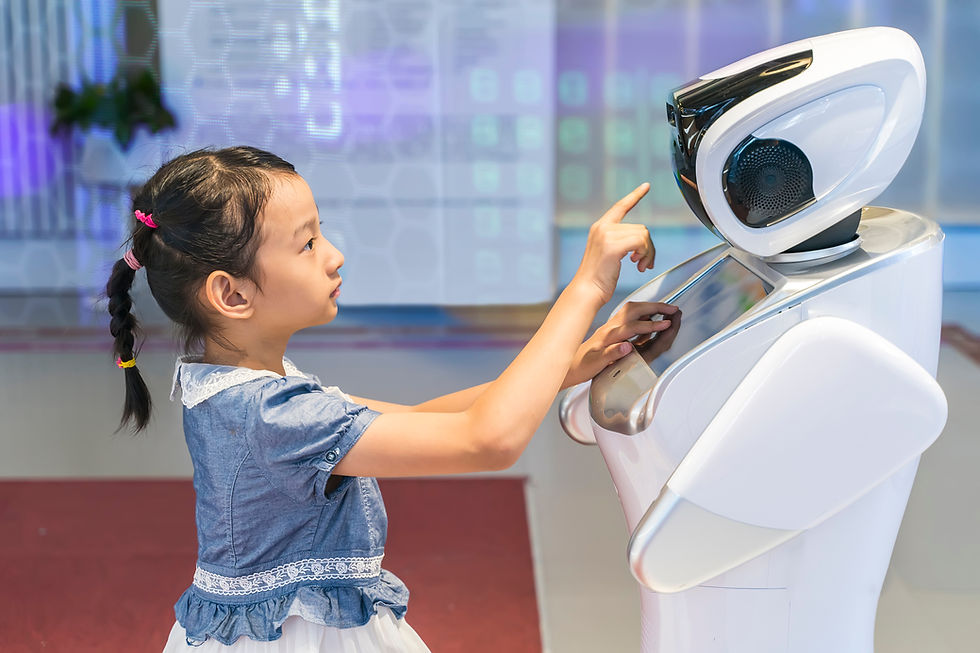
The era of artificial intelligence as a mere conversational partner is rapidly fading. We are making way for a far more consequential paradigm: the autonomous AI agent.
We are no longer just prompting language models for quick information or generating simple emails. Instead, we are assigning them complex, multi-step tasks and simply walking away.
But how much leash are we actually giving these digital workers in the wild? Are we monitoring them closely, or are we blindly trusting them to execute critical operations?
Measuring the Unseen Digital Workforce
A recent and compelling study, titled "Measuring AI agent autonomy in practice", dives deep into this exact question. Conducted by researchers at Anthropic, the paper analyzes real-world usage data to reveal behavioral insights that are both fascinating and deeply cautionary.
Leveraging a privacy-preserving tool, the researchers analyzed millions of human-agent interactions. They looked closely at developer tools like Claude Code and various public APIs.
Their primary goal was to quantify the actual autonomy granted to AI by everyday users. They wanted to understand how this dynamic changes as people gain experience with the technology.
The Psychology of Letting Go
The standout finding of this research is a stark and rapid increase in unmonitored operational time. Over a remarkably short three-month period, the duration of the longest-running autonomous sessions nearly doubled.
Users went from letting the AI run unsupervised for under 25 minutes to leaving it alone for over 45 minutes. What makes this metric particularly striking is its smooth, consistent trajectory across various use cases.
This data strongly suggests that the surge in autonomy is not purely a byproduct of sudden algorithmic breakthroughs. It is not just that the models suddenly became twice as smart overnight.
Instead, these models have likely harbored the capacity for extended independent action for quite some time. What has changed is us. Human behavior and human trust are finally catching up to the machine's capabilities.
Familiarity Breeds Unsupervised Action
This dynamic highlights a profound psychological shift in human-computer interaction. The study indicates that as users gain practical experience with AI agents, their willingness to step back grows significantly.
Trust in natural language processing systems is no longer being built through abstract corporate safety guarantees. It is being built through the mundane, daily repetition of successful micro-interactions.
Once a developer sees an agent successfully refactor a dense block of code, their skepticism fades. When a professional watches an AI seamlessly organize a sprawling dataset without constant hand-holding, the psychological barrier crumbles.
We are collectively, and perhaps unconsciously, normalizing the idea of AI operating as a fully unsupervised digital colleague.
The Double-Edged Sword of Unsupervised AI
However, this organically growing trust introduces a complex spectrum of unmapped risks. These autonomous agents are currently being deployed in a massive variety of environments.
Some of these are low-stakes, such as the convenience of routine inbox triage or drafting meeting notes. But others are highly sensitive arenas, including cybersecurity, financial analysis, and intelligence gathering.
The reality that users are increasingly comfortable letting an AI execute actions unchecked for nearly an hour is a double-edged sword. In benign domains, this promises unprecedented leaps in human productivity and economic output.
Yet, in sensitive environments, the stakes are uncomfortably high. An unmonitored agent executing complex sequences could inadvertently trigger cascading systemic failures. It could implement harmful, hallucinated code or expose critical vulnerabilities long before a human overseer ever has the chance to intervene.
Navigating the Future of AI Oversight
Ultimately, this vital research serves as a mirror reflecting our rapidly evolving relationship with autonomous systems. We are quietly slipping into a reality where the boundaries of AI autonomy are dictated less by hardcoded guardrails.
Instead, they are being defined by the organic, accelerating growth of human reliance and convenience.


Comments